
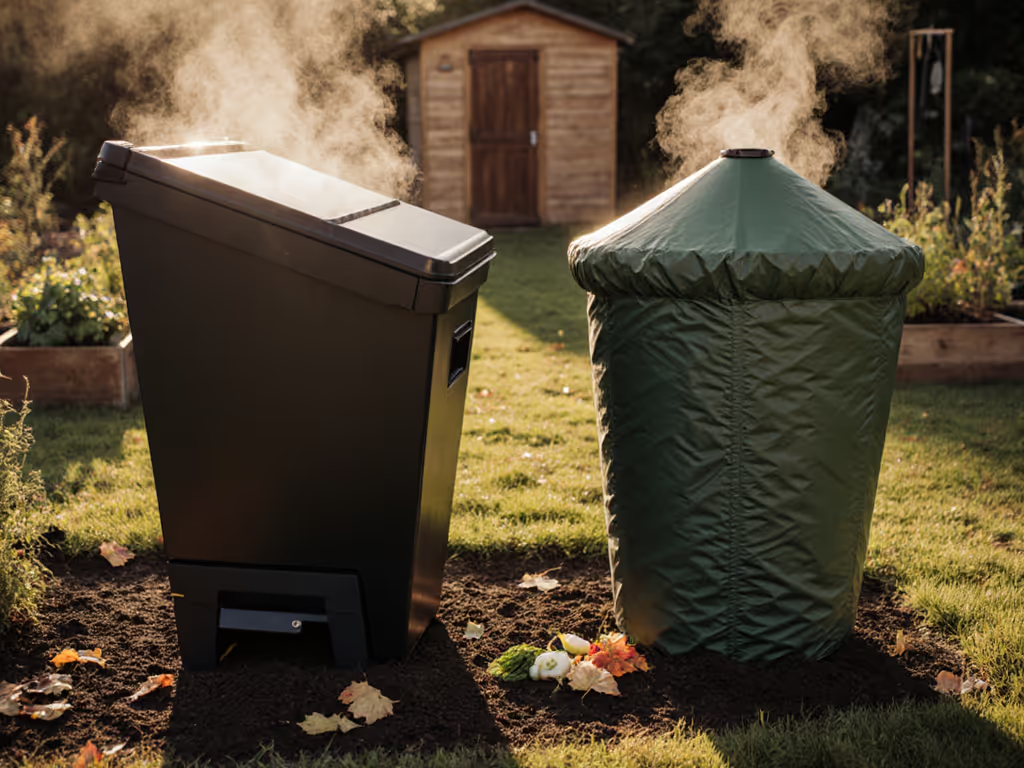
Pathogen-Free Compost: Digesters vs Traditional Bins
By Lucas Hoshino • 27th Mar
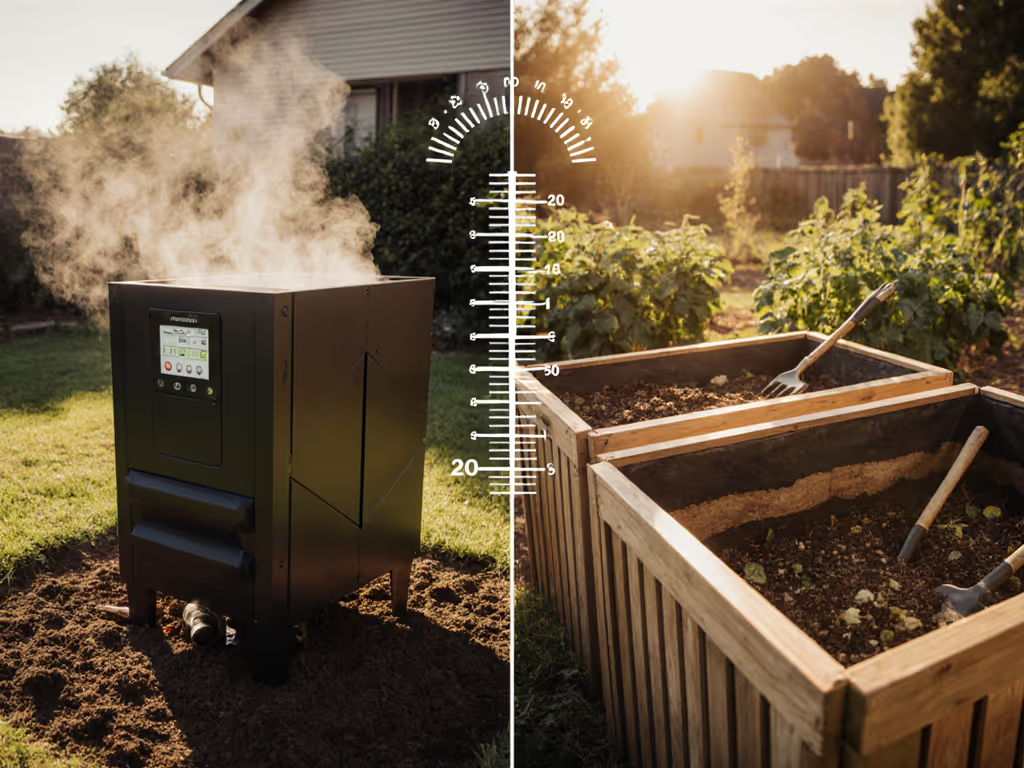
When you're deciding between a compost digester vs traditional system, pathogen safety often doesn't top the list until you realize you're spreading that "finished" pile onto the bed where your kids' vegetables grow. The truth is, not all compost methods reach temperatures high enough to eliminate harmful pathogens like E. coli and salmonella, and the choice of bin directly affects whether your finished product feeds plants safely or carries hidden risk.
What matters most: your system must reach sustained heat, maintain aerobic conditions, and cure fully before it touches your soil. These are the pillars of safe, dependable compost.
Understanding Pathogen Risk in Composting
Most home composters don't think about pathogens until something goes wrong. Food scraps (especially meat, dairy, and soiled paper) carry bacteria that survive in cool piles. A traditional cold compost pile sitting at 50-60°F for months won't sanitize anything; it'll just slowly break it down while pathogens persist. This is why many gardeners who've switched from soggy, stalled piles to systems designed for heat and airflow report cleaner results on the harvest end, they're not just getting finished compost, they're getting safe compost.
Pathogen elimination requires two conditions: First, sustained temperatures of 131-140°F (55-60°C) for 15-30 days, depending on the pathogen. Second, aerobic (oxygen-rich) conditions so beneficial microbes outcompete pathogens. Skip either, and you're rolling the dice. To track heat accurately, pick a reliable compost thermometer suited to your bin depth.
Traditional Bins: Heat Retention and Maintenance Trade-offs
A freestanding compost bin (wooden, plastic, or metal) sits above the ground and relies on manual management to generate heat. The mechanics are straightforward: you layer green and brown materials, maintain a carbon-to-nitrogen ratio, turn occasionally, and hope airflow does the work.
The upside is real. Bins offer better heat retention than open piles; insulated sides keep the decomposition process warmer longer. This matters. A well-managed bin with regular turning can reach the temperature threshold needed to reduce some pathogens, especially if you're disciplined about moisture and carbon balance. For households willing to turn weekly and monitor conditions, traditional bins are affordable and effective at scale.
The downside is maintenance burden. You must:
- Mix materials and maintain airflow by turning regularly
- Balance "greens" and "browns" (wet food scraps vs. dry matter)
- Monitor moisture: too wet and you get anaerobic, fetid conditions; too dry and decomposition stalls
- Keep pests at bay and manage odor when things go wrong
For busy households or renters without consistent access to a yard, this constant attention is a deal-breaker. I learned this the hard way: my soggy pile strategy (a well-intentioned pile that never quite heated up) meant I was never confident using the output on edible beds. Only when I shifted to an aerated static bin system did I see consistent results. The bin held temperature, I sifted the output cleanly, and my soil organic matter actually climbed year over year. Plants vote with roots, and theirs ran deeper once I stopped guessing.
Digesters: Sealed Systems and Faster Processing
Compost digesters (whether in-ground, like the sealed systems mentioned in research, or closed-vessel models) take a different approach. They're buried directly in soil or fully enclosed, which eliminates turning entirely and seals out pests and odors. Learn how digesters work and who they're best for in our compost digester guide. The tradeoff is that many digesters process waste more slowly than hot composting bins, because they rely on cool-to-warm decomposition aided by worms and soil microbes rather than rapid thermophilic breakdown.
Some in-ground digesters accept food waste types (meat, dairy, pet waste) that traditional bins won't handle, because the sealed environment prevents pest access and odor escape. However, lower processing temperatures mean pathogen elimination is less certain. If pathogen-free compost is your priority (especially if you're feeding that compost back to a vegetable garden) a digester alone may not be sufficient without a follow-up curing step.
The speed benefit is real for some systems. Worm-based underground composters can process waste faster than passive decomposition in a pile, but they're still cooler systems. The output is rich, but it's pre-finished compost that often requires additional time or aeration to fully stabilize and sanitize.
Comparative Overview: What Each System Delivers
| Factor | Traditional Bin | In-Ground Digester |
|---|---|---|
| Pathogen Elimination | High (if managed for heat & turning) | Lower (cool-process dependent) |
| Heat Generation | 131-160°F+ (with weekly turning & balanced C:N) | 50-80°F (warm soil-assisted) |
| Maintenance | Regular turning, monitoring | Minimal to none |
| Pest Control | Requires discipline; bins help but aren't foolproof | Sealed; naturally vermin-proof |
| Odor Control | Can smell if unbalanced; needs turning | Naturally odor-free |
| Speed to Usable Compost | 3-6 months (active management) | 6-12 months (passive) |
| Waste Types Accepted | Mostly plant-based; no meat/dairy | All food types |
| Best For | High-confidence pathogen elimination & bulk composting | Low-maintenance, odor-free diversion & direct soil feeding |
When You Need Pathogen-Free Compost
If your goal is to produce compost safe for edible gardens (particularly for root crops or plants where the edible part touches soil) a traditional hot-composting bin with discipline is your clearest path. You control the heat through carbon balance, turning frequency, and moisture management. Reach sustained 131°F+ for 15 days minimum, cure the pile afterward for an additional 4-8 weeks, and you've met the safety threshold for most home applications.
For households without time or space for active turning, the safer play is a hybrid. Use a sealed digester (in-ground or enclosed) for daily food scrap diversion, zero odor, zero pests, zero fuss, then supplement with a smaller traditional bin or bokashi system for high-volume green waste that actually needs hot composting to finish safely. This matches outcome to effort: digesters feed your soil directly around plants; bins produce shelf-stable, sanitized compost for where you need it most.
Nutrient Retention and Pathogen Trade-off
One often-overlooked consequence: temperature affects nutrient profile. Hot composting processes (131°F+) cause some nitrogen loss as ammonia, especially if not carefully managed. Cool, anaerobic processes (in digesters or poorly aerated piles) retain nitrogen but risk pathogen survival and odor. The best outcome isn't one extreme; it's heat high enough to sanitize, then a curing phase to stabilize nutrients. This is why a two-stage approach works: hot bin for pathogen elimination, followed by low-energy rest-and-cure.
Practical Pathways Forward
For homeowners with space and willingness to turn: Choose an insulated traditional bin. Log your turning schedule, track moisture, and aim for weekly turning with a 30:1 carbon-to-nitrogen ratio to reach target temperatures. Sift the output before using it on edible beds.
For renters, busy households, or small-space gardeners: Use a sealed digester for everyday food waste, paired with municipal curbside compost if available. Eliminate the pathogen question by outsourcing hot processing to professionals with proven temperature control.
For those balancing both worlds: Combine a traditional bin for seasonal bulk waste (fall leaves, spring cleanup) with an in-ground digester for daily scraps. You get scale from the bin and convenience from the digester, compost that feeds plants, not just the bin owner's ego.
Key Takeaway: Heat, Duration, and Curing Matter
Pathogen-free compost isn't about the bin type alone; it's about the conditions the bin creates and how you finish the product. A traditional bin wins if you prioritize active pathogen elimination through sustained heat. A digester wins if you value low maintenance and are willing to rely on longer curing times or municipal-grade hot processing elsewhere. Neither is universal. The right choice depends on your climate, available time, waste volume, and how confident you need to be when spreading that compost on edible beds.
Measure twice, compost once. The finished product (and your plants' health) depends on the path you choose.
Explore Further
Before committing to a system, clarify your real constraints: How much food waste does your household generate weekly? Do you have a yard or only a balcony? Which local ordinances or HOA rules apply? Can you commit to weekly turning, or do you need hands-off operation? Once you answer these, the best bin choice (and the safety profile it delivers) becomes clear. Visit local composting workshops, test a small digester or bin for a season, and talk to neighbors using the same method in your climate. The system that works is the one you'll actually use.
Related Articles