Compost Turn Mechanism Comparison: Low-Effort Aeration
By Lucas Hoshino • 23rd Feb
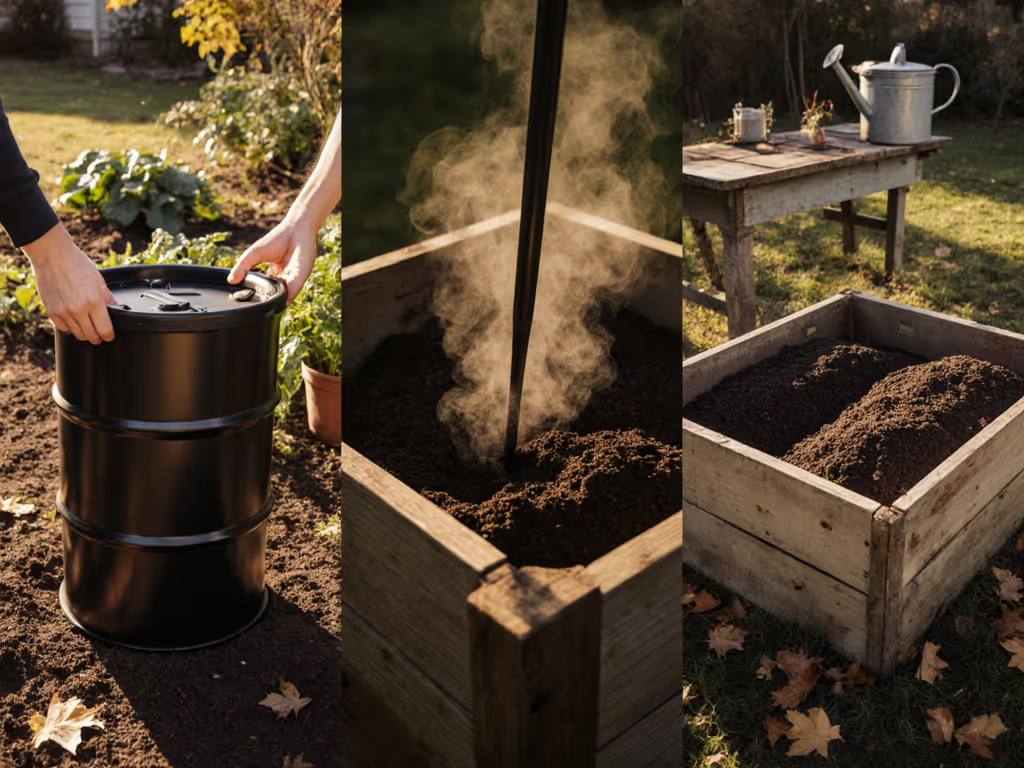
When you're choosing a composting system, the compost turn mechanism comparison often gets buried under talk of bin size and price. But the way you aerate your pile (whether by hand crank, handle, self-propelled machine, or static design) directly determines how fast your feedstock becomes usable compost, how much physical effort you'll invest, and whether you actually stay consistent enough to finish the job. This is the detail that separates systems that work from systems that sit dormant in your yard. An aerator for compost isn't just a convenience; it's the tool that controls whether decomposition happens in weeks or stalls for months.
I learned this the hard way. My early piles sat wet and compacted, beautiful to look at from across the fence, useless underneath. When I switched to an aerated static bin with intentional turning (even manual), logged a few C:N ratios, and sifted the finished product, my tomatoes doubled. More importantly, my soil organic matter climbed. The bin choice finally showed up in my garden. That's when I realized: compost that feeds plants, not just the bin owner's ego.
The mechanism you choose determines whether composting becomes a sustainable habit or a burden you avoid. Let's break down what actually matters when you're comparing turning systems.
Why Aeration Is the Bottleneck
Decomposition speed hinges on three factors: material composition, moisture, and oxygen. Of these, aeration is the one you directly control through turning. Without adequate turning, composting takes 3-6 months or longer; with the right mechanism and consistent effort, you can compress that timeline to 15 weeks or less.
Here's the mechanics: the center of your pile heats up and depletes oxygen quickly. When oxygen runs out, beneficial aerobic microorganisms slow dramatically, and your pile stalls. Turning lifts material into the air, releasing trapped CO2 (heavier than air) and pulling fresh oxygen back in. This isn't theoretical, it's the difference between an active, hot pile and a soggy, anaerobic mess.
Frequency matters too. It depends on your material's C:N ratio, moisture level, and particle size. But the burden of frequent turning often determines whether gardeners actually do it. Low-effort mechanisms win here because consistency trumps perfection.
Four Core Turning Approaches
Tumbler Systems: Ease Over Time
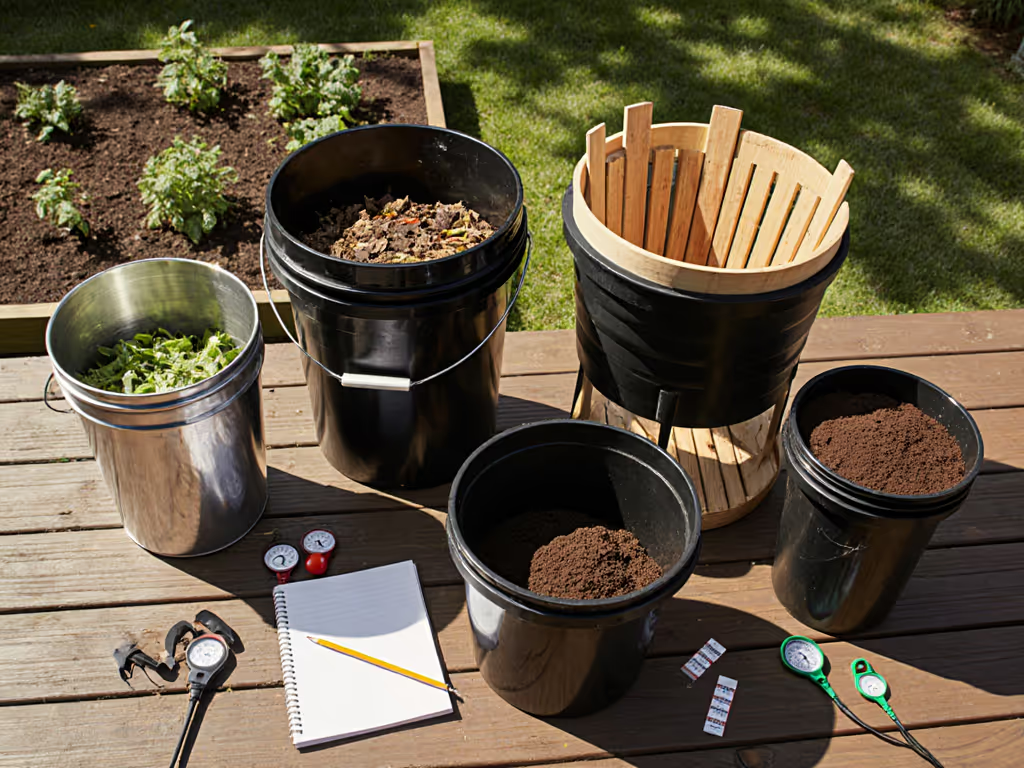
Crank vs. handle compost systems are the most accessible for home gardeners. You manually rotate the drum (either by hand crank or handle), and the internal baffles flip and mix the material in a single rotation. Tumblers are sealed, which speeds decomposition and keeps pests out.
The trade-off: you're doing the work. A full tumbler can weigh 100+ pounds when loaded, and cranking requires upper body strength and repetitive motion. For renters, small-space gardeners, and those with accessibility concerns, this is where physical reality matters. However, because tumblers are fully manual, you control frequency precisely. Most produce finished compost in 6-12 weeks if turned 2-3 times weekly. If continuous batches matter, compare dual-chamber tumblers for uninterrupted production.
Tumbler design efficiency improves with drum size and bearing quality. Larger drums hold more material but are harder to turn when full. Smaller models (30-50 gallons) suit apartment dwellers and low-scrap households. The frame height affects ergonomics too; elevated models reduce bending strain compared to ground-level designs.
Windrow Turners: Scale and Power
If you're composting larger volumes (a family with significant garden waste or a small farm), windrow (elongated pile) systems and mechanical turners shift the equation. Self-propelled compost turners (crawler-type machines) straddle a windrow and mechanically flip the entire pile in a single pass. They require no tractor and operate with one person, turning depths up to 1.5 meters and widths up to 3 meters. These machines can condense composting to 15-20 weeks.
Cost and space are the gates. A self-propelled turner is a capital investment ($20,000+), and you need outdoor space for windrows. For small-scale residential composting, this approach is overkill.
Tractor-mounted or tow-behind turners are cheaper ($11,550-$65,480 depending on model) and suit farms with existing equipment. They rely on tractor power, so labor is lower, but you're locked into tractor availability and fuel costs.
Groove-Type Systems: Automation with Infrastructure
Groove (or rail-type) turners sit above fermentation grooves and flip compost layer by layer. They're fully automated, require only 1-2 workers to feed materials, and handle multi-groove fermentation with a single machine. Composting time can drop to 15-30 days under ideal conditions, and computer-controlled oxygen, mixing, and deodorization happen without operator intervention.
The catch: groove systems require built infrastructure (concrete grooves, rails, electrical or hydraulic systems). They're designed for commercial-scale organic fertilizer production, not home gardeners. If you're running a small farm or community composting operation, this is powerful. If you have a backyard, it's not feasible.
Static Aeration: Passive with Intentionality
Static aeration (a pile built over perforated pipes or in a bin with passive airflow) turns the decomposition equation sideways. No mechanical turning, no hand-cranking. Oxygen is supplied passively or via forced aeration (fan-powered, rarely practical for home use). This approach trades longer time (4-6 months) for low-effort compost turning.
Why choose this? Physical accessibility, consistency of effort, and simplicity. I favored static bins because I could fill them once and resist the temptation to tinker. Add the right C:N ratio, monitor moisture, let biology work, and sift at the end. For people with mobility constraints, time poverty, or resistance from housemates ("Stop cranking that thing!"), static aeration removes the friction.
Physical Effort and Maintenance Reality
This is where the analysis must include your body and your actual habits. Hand-crank tumblers demand 5-10 minutes of upper-body effort per turn, 2-3 times weekly. Over 12 weeks, that's 30-40 turns. If you have shoulder or wrist issues, arthritis, or simply prefer not to crank, the barrier is real and worth naming. For low-strain options and setup tips, see our disability-friendly compost bin guide.
Windrow and groove turners eliminate manual effort but require equipment access and operational knowledge. Self-propelled machines are heavy, loud, and need fuel and maintenance.
Static bins and low-effort designs skip the cranking but demand discipline around C:N ratios and moisture. You're trading physical effort for cognitive load. For many households, that's a win. Plants vote with roots, and healthy roots don't care whether you turned the pile manually or let biology do the work, as long as the finished product is mature and balanced.
Decision Framework: Which Mechanism Fits Your Life
Choose based on four variables:
Scrap Volume: Small household (1-2 people, minimal gardening waste)? Hand-crank tumbler. Large garden or small farm? Windrow + mechanical turner. Medium household (3-5 people, seasonal yard waste)? Static bin or mid-sized tumbler.
Space and Zoning: Urban apartment or small patio? Tumbler or static bin. If you're deciding between designs, our stationary vs tumbling comparison details speed, effort, and maintenance trade-offs. Suburban yard with space for windrows and equipment? Mechanical turner becomes viable. Rural property with infrastructure needs? Consider grooves if commercial-scale.
Physical Ability: If cranking is difficult, static aeration or mechanical systems avoid the barrier. Accessibility isn't a luxury, it's a prerequisite for consistency.
Climate: Hot, dry regions benefit from sealed tumblers (reduced moisture loss). Cold winters slow all systems; static aeration in a well-insulated bin may outperform high-turning frequency in freezing conditions. For cold-weather strategies and bin picks, see our winter composting comparison. Wet climates demand drainage. Raised static bins or tumblers with good base drainage beat ground-piled windrows.
Household Buy-In: Will a spouse or roommate support regular cranking? Or does a set-and-forget static design win cooperation? Honesty here prevents abandonment.
The Outcome-First Question
Every mechanism promises a finished product, but not all deliver equally. A well-maintained tumbler produces uniformly dark, crumbly, odor-free compost. A statically aerated bin requires longer but yields mature humus if patience is applied. Mechanical turners generate volume quickly but quality depends on feedstock consistency and curing time (a fact confirmed by industry practice). A groove system with computer control produces the most consistent batches but is built for commercial scale.
Before you choose, ask: What will I actually do with this compost? Container plants? Amending raised beds? Large-scale landscape work? A tumbler's batch size suits containers and small beds. A windrow or groove system feeds serious gardening or soil improvement across multiple acres.
Second question: What am I willing to maintain month after month? Enthusiasm drops when physical effort or cognitive load outpaces convenience. Static systems win loyalty because they align effort with reality.
Moving Forward
The compost turn mechanism comparison matters because your choice either supports or undermines your composting habit. Ergonomic compost mechanisms reduce the friction between intention and action. A tumbler works if you commit to twice-weekly cranking and have the upper-body strength. A static aerated bin works if you accept a longer timeline and discipline around moisture and carbon-nitrogen balance. A mechanical turner works if you have the space, budget, and volume to justify the investment.
The best system is the one you'll actually use consistently. Measure your scrap volume, assess your physical capacity, check your climate, and build your infrastructure around what you'll genuinely maintain. Then track your results (soil organic matter, finished compost quality, ease of sifting) over a season. Let the data guide your next choice.
Your garden will vote with roots. The mechanism is just the means to healthier soil.
Related Articles