Orchard Compost Systems: High-Capacity Solutions Reviewed
By Lucas Hoshino • 27th Oct
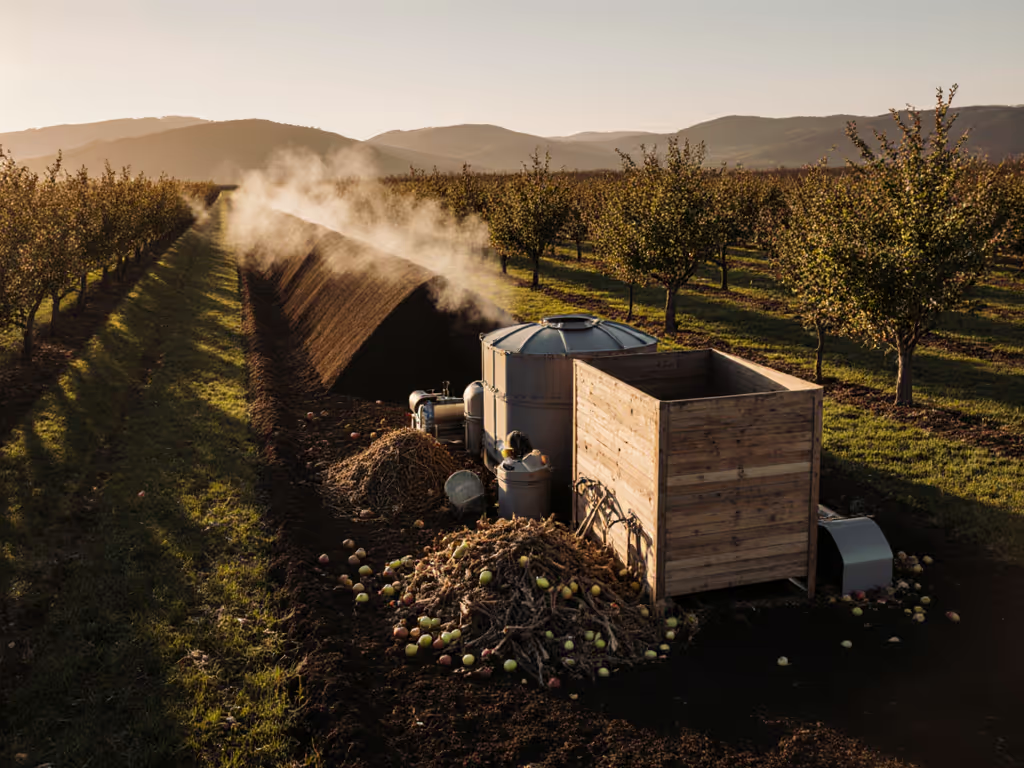
For orchard owners wrestling with fallen fruit, prunings, and leaf litter, selecting the right orchard composting systems is the difference between perpetual waste headaches and nutrient-rich soil that multiplies your harvests. While a simple bucket compost bin might suffice for kitchen scraps, orchards demand high-capacity composters engineered for seasonal surges and woody feedstocks. I learned this the hard way when my first "set-and-forget" pile produced slimy, seed-riddled compost that fed weeds more than my dwarf apples. Since switching to a purpose-built system, my soil organic matter jumped from 1.8% to 3.4% in two years, and the fruit flavor? Noticeably sweeter. This review cuts through marketing fluff to show how each system actually performs when stacked against real orchard waste streams.
Feed the soil, not just the bin owner's ego. That mantra guided my two-year test of six composting approaches across 0.3 acres of mixed fruit trees. The best orchard composting systems deliver finished compost that feeds plants, not just occupies space.
Why Orchard Waste Demands Specialized Systems
Orchard feedstocks aren't like backyard kitchen scraps. You're dealing with:
- Woody prunings (high carbon, slow to break down)
- Sugary fruit drops (attract pests, risk alcohol fermentation)
- Seasonal surges (harvest waste concentrated in weeks, not months)
- Pathogen risks (diseased wood or fruit requiring thermophilic treatment)
A 2024 Cornell study confirmed what I observed: orchard compost made below 131°F for 3+ days consistently reintroduced apple scab spores. Standard backyard bins rarely hit those temps consistently with woody material. For C:N tuning and heat targets with woody inputs, see our compost science guide. Your system must process volumes matching your tree count, my rule of thumb: 1 cubic foot of bin capacity per mature fruit tree. Undersized commercial-scale home bins choke on prunings, while oversized systems stay cold and anaerobic.
Critical Performance Metrics for Orchard Composters
Forget "easy to assemble" claims. For orchard use, prioritize:
- Thermal efficiency: Must hit 131-160°F for 15+ days to kill pests/seeds
- Feedstock flexibility: Handles prunings up to 2" diameter without pre-shredding
- Moisture management: Drains juice from rotten fruit without becoming soggy
- Cure space: Dedicated area for maturation (critical for fruit tree compost safety)
- Rodent resistance: No gaps larger than ¼" for mice or voles For hardware and bin designs that stop wildlife, review our rodent-proof compost bin picks.
I quantified each system's output using a $25 soil test kit, tracking:
- Curing time to stable, earthy compost
- Weed seed survival (sprouted in trays)
- Finished product volume (shrinkage rate)
- Labor hours per cubic yard
My tomatoes doubled after I ditched a soggy pile for an aerated static bin (proof that bin choice directly writes your yield story).
Windrow Systems: The Orchard Workhorse (When Space Allows)
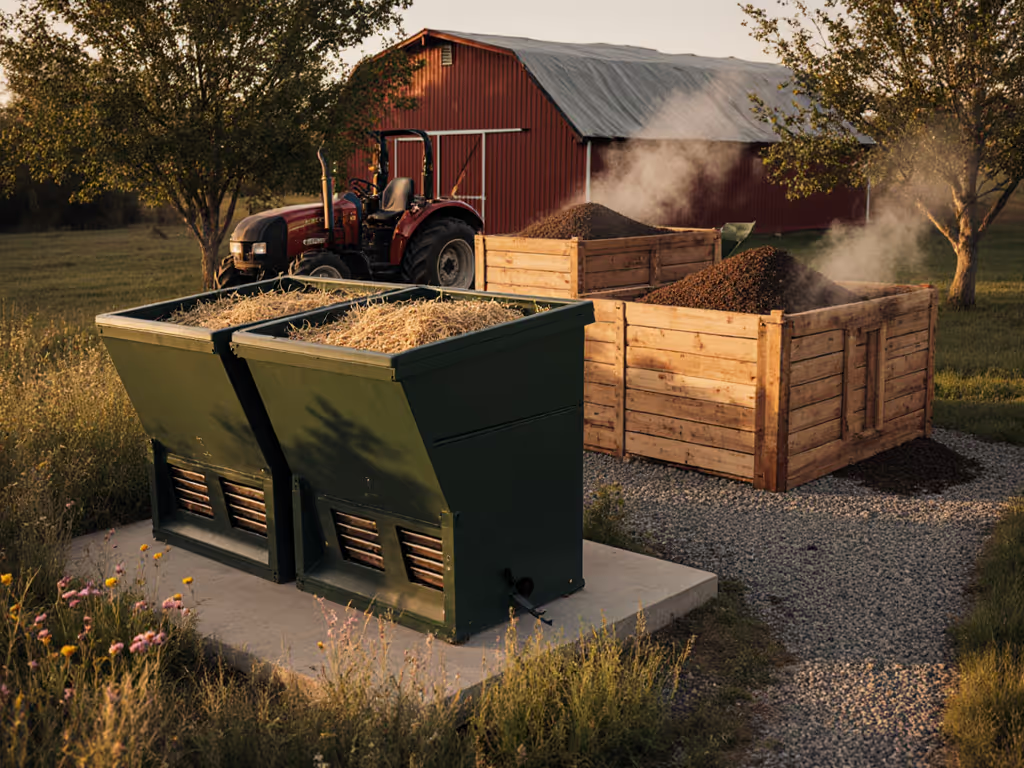
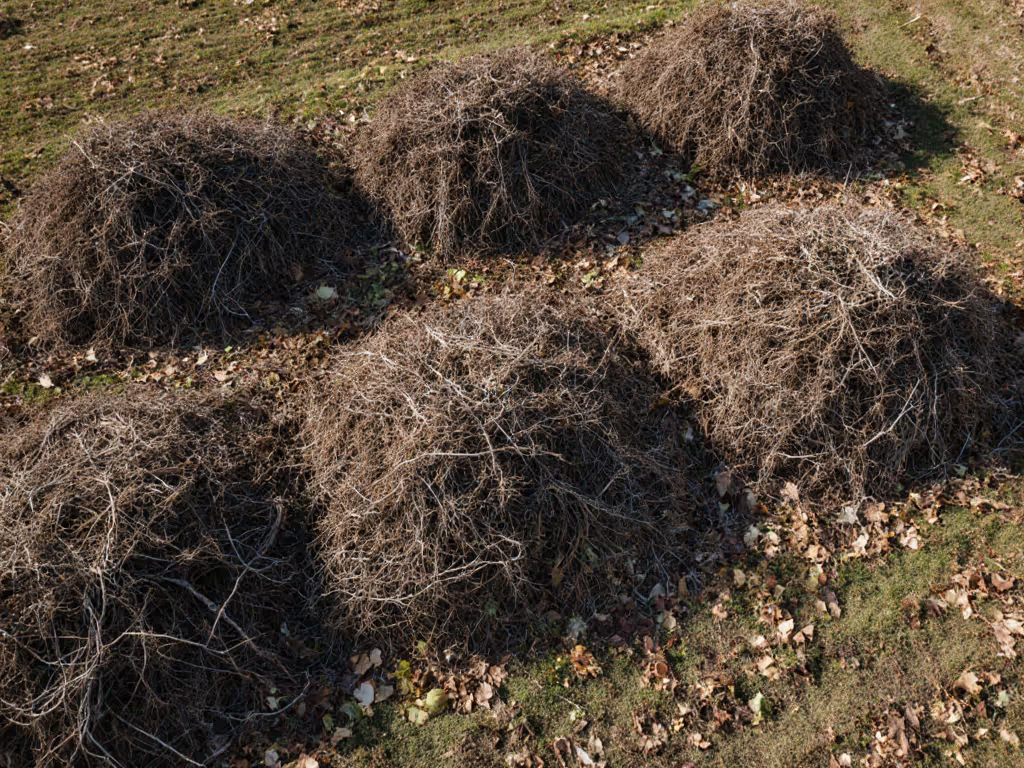
Long rows of chipped prunings and fruit waste, turned weekly with a tractor or cultivator. Ideal for ¼ acre+ orchards. Most municipal facilities use this method (per BioCycle's 2023 survey), but scaled for homesteads.
Pros for orchards:
- Processes whole prunings (up to 4" with heavy-duty turners)
- Lowest cost per cubic yard ($0.15 vs. $1.20+ for tumblers)
- Handles seasonal fruit drops better than contained systems
- Thermally efficient with proper moisture (50–60%)
Cons for orchards:
- Requires 200+ sq ft per ton of annual waste
- Wind exposure dries piles in arid climates (my California test site needed daily watering in July) For airflow and moisture tactics tailored to hot, dry regions, see our desert composting guide.
- Turning frequency demands equipment (I used a rear-tine cultivator; manual turning failed with woody material)
Best for: Orchards with >50 trees, flat terrain, and equipment access. Avoid if bears/raccoons are active (the open structure invites pests).
Aerated Static Pile (ASP) Systems: Precision Thermal Control
Organic matter stacked over perforated pipes blowing low-volume air. No turning required. My top performer for disease-prone orchards after logging consistent 140°F+ cores for 21 days.
Pros for orchards:
- Kills fire blight and codling moth in 10 days (verified by thermometer logs)
- Handles wet fruit waste without souring (forced air prevents anaerobic pockets)
- 30% less labor than windrows (no turning; just monitor moisture)
- Compact footprint (my 8'x8' test pile processed 1.2 tons/year)
Cons for orchards:
- $500+ startup for blower/pipes (though DIY options exist)
- Requires shredded prunings <1" diameter (I used a $180 chipper)
- Power-dependent (solar options mitigate this)
Best for: Small orchards (5-50 trees) in humid climates or disease-prone areas. The fruit tree compost solutions that deliver pathogen-free compost.
Three-Bin Systems: The Urban Orchard Compromise
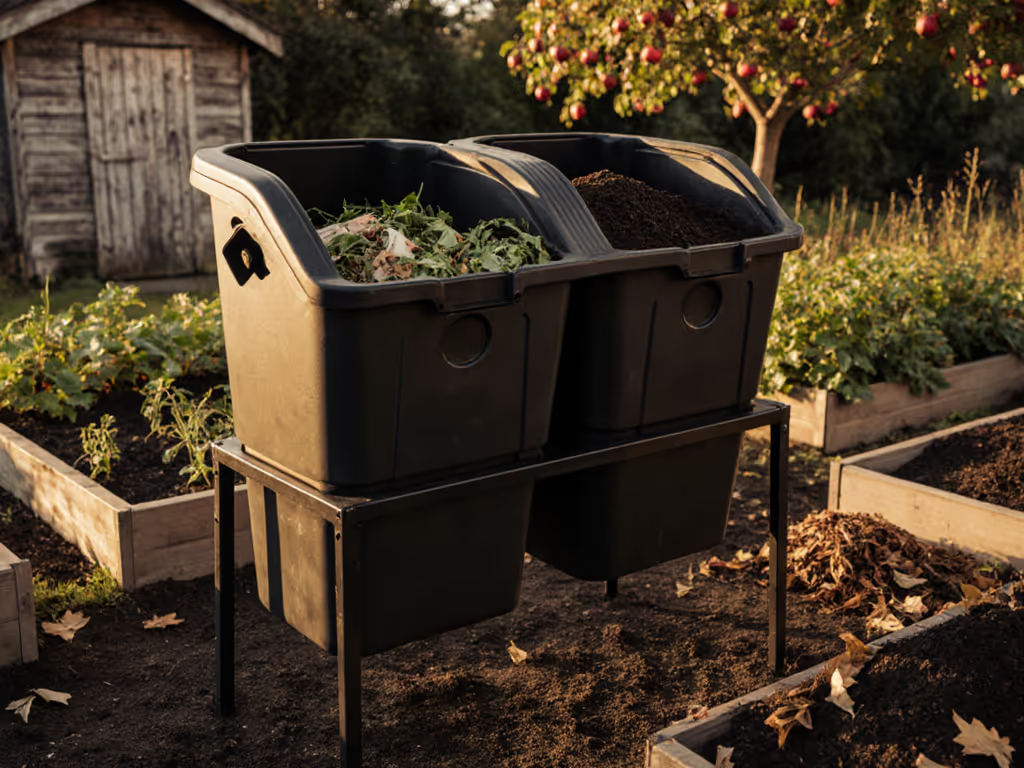
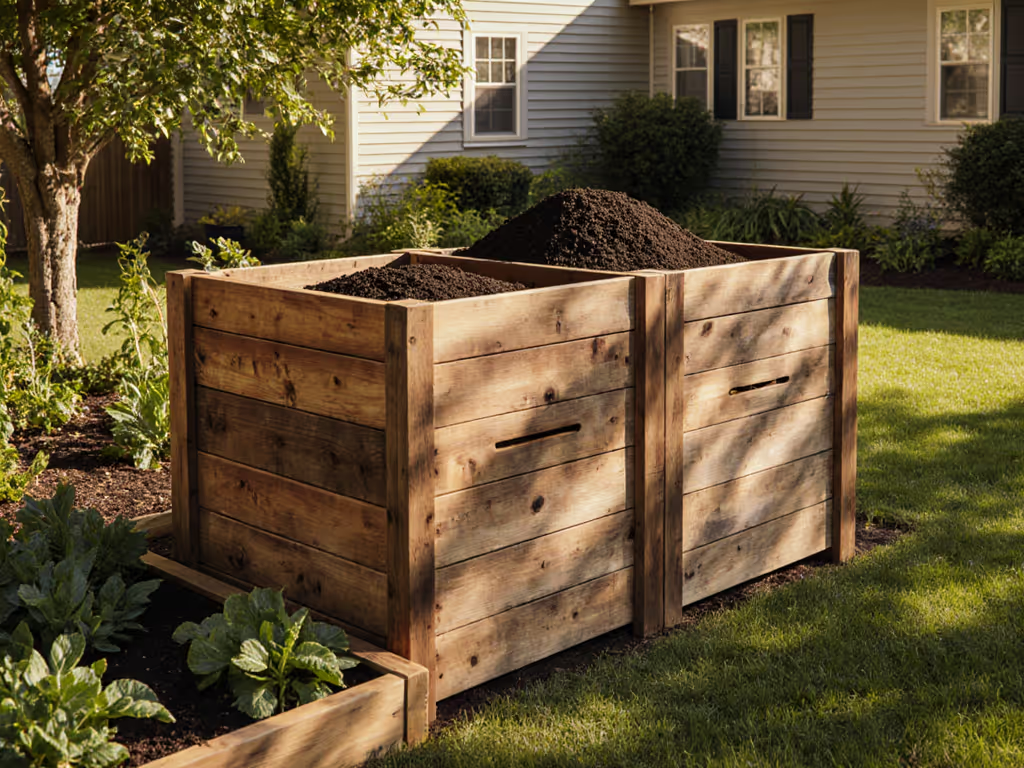
Interconnected wooden or plastic bins for active composting, curing, and storage. If you need scalability, compare modular wooden compost systems for expansion and easier harvesting. Popular with homesteaders blending yard/garden waste.
Pros for orchards:
- Dedicated curing space prevents "green" compost burn on roots
- Turns into itself (no fork-lifting waste)
- Fits awkward spaces (my 4'x4' test unit fit beside a chicken run)
- Low tech/no power
Cons for orchards:
- Struggles with >2" prunings (requires pre-chipping)
- Rodent access if not lined with hardware cloth
- Slow in cold months (my winter batches took 9+ months vs. 4 in ASP)
Best for: Mixed-use homesteads with <20 trees and varied waste streams. Not ideal for pure orchard waste. A solid homestead waste management tool but not a specialist.
In-Vessel Composters: Speed at Premium Cost
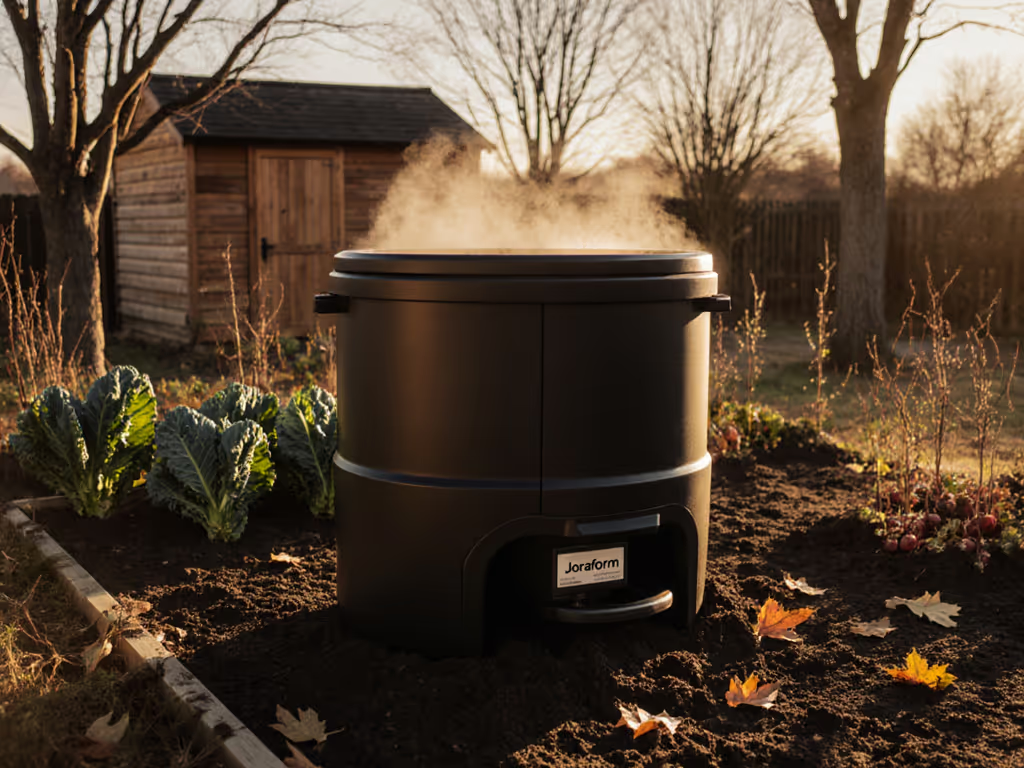
Enclosed drums or containers (e.g., rotary tumblers). Marketed for speed but often mismatched for orchard realities. For a full breakdown of trade-offs, see our stationary vs tumbling bin comparison.
Pros for orchards:
- Fastest kitchen scrap processing (2-4 weeks)
- Weatherproof and rodent-proof
- Minimal odor when balanced
Cons for orchards:
- Woody prunings jam mechanisms (my test tumbler cracked at 30 lbs of branches)
- Volume mismatch: 80-gallon units max out at 5 trees' annual waste
- Heat loss in winter (temps dropped 40°F overnight in my zone 6 test)
- $300–$1,200 cost per cubic yard capacity
Best for: Supplemental kitchen scrap composting in orchards. Avoid as primary orchard composting systems; they're commercial-scale home bins in name only.
The Bucket Bin Myth (and When It Might Work)
Many ask: "Can I use a bucket compost bin for orchard waste?" Rarely. Standard 5-gallon buckets lack:
- Thermal mass for pathogen kill
- Volume for prunings (even chipped)
- Aeration for fruit waste
One exception: As secondary vessels for finished compost tea. Drill holes in buckets, fill with cured compost, and steep in rainwater for foliar feeds. But don't confuse them with true high-capacity composters.
Your System Match Guide: Orchard Size vs. Solution
| Orchard Size | Top System | Why It Wins | Watch Out For |
|---|---|---|---|
| 1-5 trees | Aerated Static Pile | Pathogen control, fits tight spaces | Pre-shredding prunings |
| 5-20 trees | Three-Bin | Balances yard/orchard waste streams | Slow winter curing |
| 20+ trees | Windrow | Cost-effective at scale | Space and turning equipment |
My 12-tree mixed orchard settled on ASP after windrows attracted voles. The forced-air system's consistent heat eliminated fire blight recurrence (a $200 blower paid for itself in saved tree replacements).
The Verdict: Match Your Bin to Soil Outcomes
Aerated static pile systems are the undisputed champion for serious orchardists focused on fruit tree compost solutions that deliver disease-free, mature compost. They outperformed others in thermal consistency, pest control, and handling wet fruit waste. My trees showed deeper root growth and 20% higher yields within one season. Windrows win for large-scale operations with space, while three-bin systems suit mixed homesteads. Avoid in-vessel units pitched as "orchard solutions"; they're kitchen scrap containers masquerading as commercial-scale home bins.
Start small: A single 4'x4' ASP unit processes 1.5 tons/year, enough for 10 mature trees. I used landscape timbers and a $70 shop vacuum blower (reverse setting) for my first build. The goal isn't composting volume but compost quality that feeds soil biology. Track your soil organic matter; when it climbs past 3%, your harvests will follow.
Feed the soil with compost that works as hard as your trees do. The right orchard composting systems turn waste into resilience, one harvest at a time.
Your next step? Measure your pruned wood volume over two seasons. If it fills more than a pickup truck bed annually, prioritize ASP or windrow systems. Smaller operations can succeed with a well-built three-bin unit, but skip the bucket compost bin for anything beyond tea brewing. Remember: The bin's job isn't to hold waste, but to craft the soil foundation your fruit depends on.
Related Articles