

5 Best Electric Composters for Commercial Kitchens
By Aisha Rahman • 31st Mar
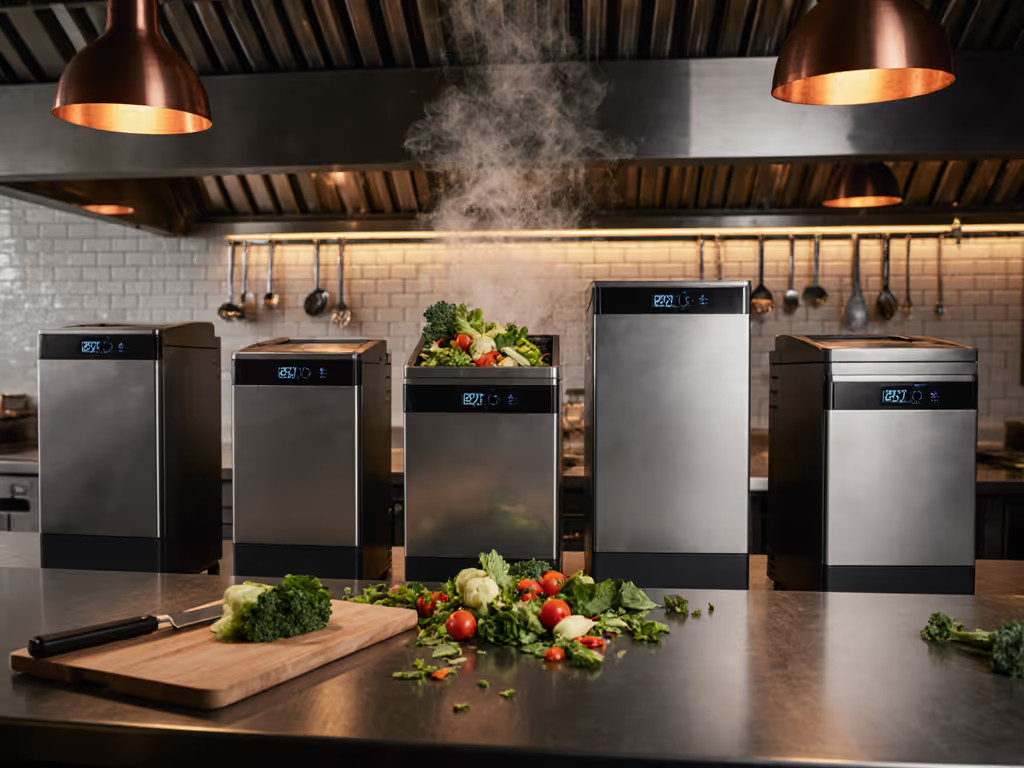
When a restaurant, café, office, or institutional kitchen generates food scraps daily, a home electric composter or food waste processor isn't just convenient - it's a measurable waste reduction asset. For a quick primer on how these units work and where they shine, see our electric composter guide. Commercial kitchens produce concentrated volumes of organic material, and traditional outdoor composting methods often can't keep pace or meet urban ordinances. A well-designed kitchen electric composter bridges that gap by converting scraps into shelf-stable material or finished compost in hours rather than months. But not every residential-scale electric composter is built for commercial rigor, and the wrong choice wastes energy, capital, and credibility with staff.
I've benchmarked composters across climates and scales, logging heat signatures, processing times, and maintenance demands. For commercial kitchens, the calculus is straightforward: you need consistent throughput, low odor (non-negotiable around food prep), sealed containment (health codes and pests), and realistic power consumption. Below are five models that deliver measurable performance in commercial kitchen environments - ranked by heat retention, process reliability, capacity, and total cost of ownership.
1. Vitamix FoodCycler Eco 5 - Best for Compact Food Service
The Vitamix FoodCycler Eco 5 leads for restaurants and cafés with tight countertop real estate. Its compact footprint (roughly 11 x 8 inches) lets it fit into a prep station or back-office area, and at 3.5 pounds, staff can move or store it without strain.
Performance Metrics:
- Processing capacity: 2.2 pounds per cycle
- Cycle time: 4-8 hours (default mode) or accelerated 3-hour setting
- Power draw: 160 watts average - less than a standard microwave
- Output: Dehydrated scraps (25-30% of original weight)
The Eco 5 uses low-temperature dehydration rather than true thermophilic composting, meaning it evaporates moisture without generating the 120-140°F heat signature that some regulations or composting protocols demand. For commercial kitchens in jurisdictions that allow dehydrated waste as compost feedstock or for third-party composting pickup, this trade-off is acceptable. The sealed lid and simple push-button interface reduce staff training load.
Commercial-specific advantages:
- Energy efficient (relevant for multi-unit operations paying utilities by the pound of waste)
- Minimal noise compared to grinding-style processors
- Easy daily cleaning (removable ring, dishwasher-safe components)
Limitations:
- No heat retention or active decomposition; output requires external composting if a facility wants finished compost on-site
- Smaller batch size means high-volume kitchens must run multiple cycles daily
- Stainless-steel body can show fingerprints in food-service settings (aesthetic concern for front-of-house use)
2. Lomi Composter - Best for Higher-Volume Operations
The Lomi Composter is the logical step up for small restaurants, corporate cafeterias, or multi-unit food service operators generating 10-20 pounds of scraps per day.
Performance Metrics:
- Processing capacity: 5-liter basin (roughly 5 pounds per cycle)
- Cycle time: 3-8 hours (Eco mode) or up to 20 hours (Grow mode with added biochar)
- Power draw: 400-500 watts peak
- Output: Partially decomposed matter or compost-ready material (Grow mode)
The Lomi's larger basin doubles throughput compared to the FoodCycler Eco 5. Grow mode introduces a biochar cartridge that accelerates microbial breakdown, pushing the output closer to garden-ready compost - important if your commercial operation wants to claim carbon-neutral waste handling or donate finished compost to a nonprofit garden.
Commercial-specific advantages:
- Batch size handles lunch rush scraps from a small kitchen
- Dual-mode flexibility (fast dehydration or composting)
- Sturdy plastic construction is dishwasher-safe and less prone to staining
- Biochar cartridges are compostable
Limitations:
- Louder operation (80+ decibels) may conflict with open-kitchen layouts or noise policies
- Larger footprint (roughly 10 x 10 x 12 inches) requires dedicated counter or bin space
- Biochar cartridge replacement adds consumable cost ($10-15 per 30 cycles, or ~$120-180 annually for a high-use kitchen)
3. Reencle Electric Composter - Best for True On-Site Finished Compost
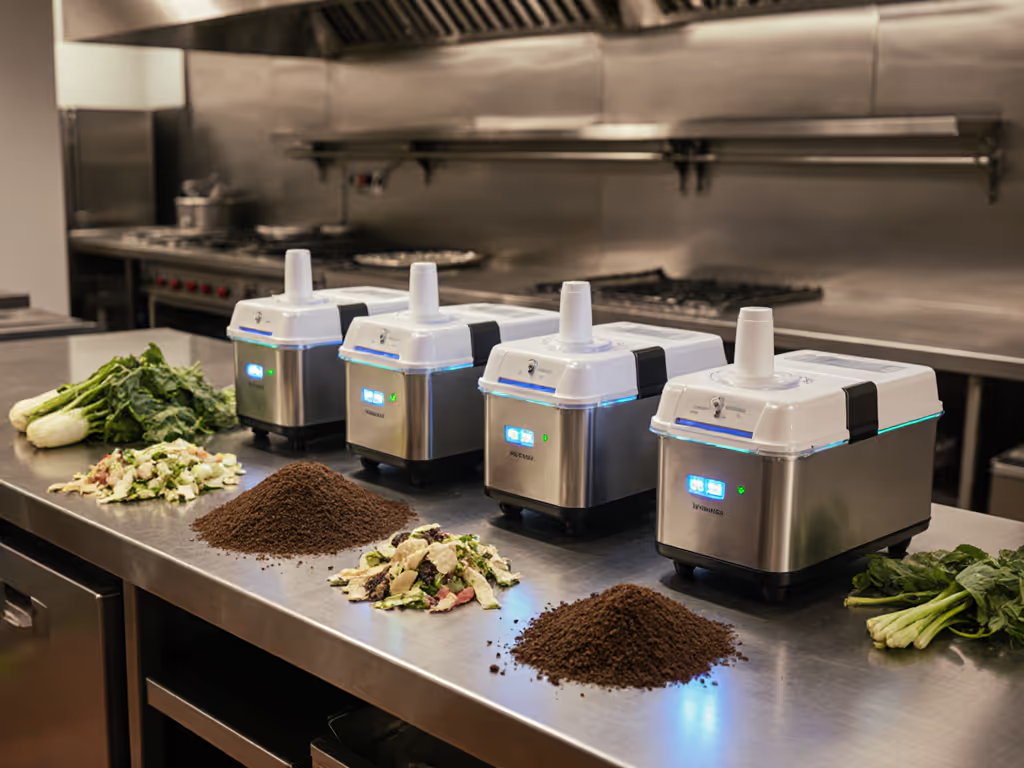
The Reencle is the outlier: it's the only residential-scale electric composter that generates actual finished compost, not just dehydrated or partially decomposed waste. For commercial kitchens in regions with compost-donation programs or on-site landscaping, Reencle's output is genuinely usable.
Performance Metrics:
- Processing capacity: 2-3 pounds per batch
- Cycle time: 4-6 hours to finished, low-odor compost (further curing recommended)
- Power draw: 800-1000 watts (significant; assumes 240V in some markets)
- Output: Finished compost, ~30% of input weight; minimal odor
Reencle uses heated fermentation chambers and aerobic decomposition, achieving internal temperatures around 130°F - the gold standard for pathogen reduction and speed. For a safety-focused comparison of pathogen reduction across systems, see our digesters vs traditional bins guide. The closed-loop design eliminates odor almost entirely, a critical advantage in food prep environments where airborne scent transfers to finished food.
Commercial-specific advantages:
- True finished compost for grounds, planters, or donation; aligns with ESG/sustainability messaging
- Odor-free operation; won't affect nearby food prep or trigger health inspector concerns
- Aesthetic exterior (modern, professional appearance) suitable for visible locations
Limitations:
- Highest price point: $300-700 (2-3x the FoodCycler or Lomi)
- Power consumption is substantial; a high-volume kitchen running 8-10 cycles daily incurs ~$40-60 monthly in electricity
- Smaller batch size limits throughput for high-volume waste streams
- Output may still require 2-4 weeks of further curing before use, extending perceived lead time
4. Vitamix FoodCycler Max - Best for Hybrid Kitchens (Residential + Small Commercial)
The Vitamix FoodCycler Max is a mid-tier option for hybrid spaces: farm-to-table restaurants with on-site gardens, corporate campuses with shared cafeterias, or food co-op kitchens where staff and volunteers process mixed volumes.
Performance Metrics:
- Processing capacity: 2.8 pounds per cycle
- Cycle time: 4-6 hours (default) or 3-hour express
- Power draw: ~180 watts
- Output: Dehydrated scraps (20-25% of original weight)
The Max splits the difference between the compact Eco 5 and the larger Lomi. It adds a few conveniences: a larger bucket, a slower default cycle (reducing noise and power spikes), and a removable catch tray for easier unloading.
Commercial-specific advantages:
- Quiet operation (~60 decibels) suits open-kitchen or office settings
- Flexible scheduling: run the 3-hour express before service, or defer to overnight 6-hour cycles
- Simple interface; easy staff rotation and minimal training
Limitations:
- Dehydration-only output (not true compost) limits end-use claims
- Mid-tier price (~$200-300) without meaningfully higher throughput than Eco 5
- Comparable power efficiency to Eco 5; marginal cost-per-pound advantage doesn't justify upgrade for single-unit kitchens
5. DIY or Commercial-Grade Alternatives - Considerations
Large institutional kitchens (university dining, hospital food service, large restaurant groups) sometimes evaluate commercial-grade food waste processors or in-sink grinders paired with municipal composting. For non-electric, high-capacity options built for restaurants and cafeterias, see our commercial compost systems guide. While not pure "composters," these merit mention.
Commercial food waste grinders (e.g., InSinkErator commercial models) process waste to slurry, piped to municipal waste streams or commercial composting facilities. Cost runs $800-2,500 for unit + installation. Advantage: invisible to diners, handles any scrap type (bones, dairy, oils). Disadvantage: high water use, municipal system dependency, no on-site compost production.
Hosted commercial composting services (contracted pickups by local composters) bypass capital expense. A 5-gallon sealed bucket collected 1-2x weekly costs $15-40 monthly. Advantage: zero on-site processing or odor. Disadvantage: ongoing subscription, no tangible on-site compost outcome, harder to verify diversion claims.
Head-to-Head Comparison: Throughput, Cost, and Compliance
| Model | Daily Capacity* | Power (watts) | Finished Compost? | Price | Best For |
|---|---|---|---|---|---|
| FoodCycler Eco 5 | 4-6 lbs | 160 | No (dehydrated) | $180-250 | Compact spaces, low-volume cafés |
| Lomi | 10-15 lbs | 400-500 | Partial (Grow mode) | $300-450 | Small restaurants, mixed-volume |
| Reencle | 6-9 lbs | 800-1000 | Yes | $500-700 | True compost output, premium ESG |
| FoodCycler Max | 8-10 lbs | 180 | No (dehydrated) | $200-300 | Hybrid kitchens, quiet priority |
*Assumes 3-5 cycles per day; actual throughput depends on scrap moisture and density.
What Matters: Measuring Commercial Viability
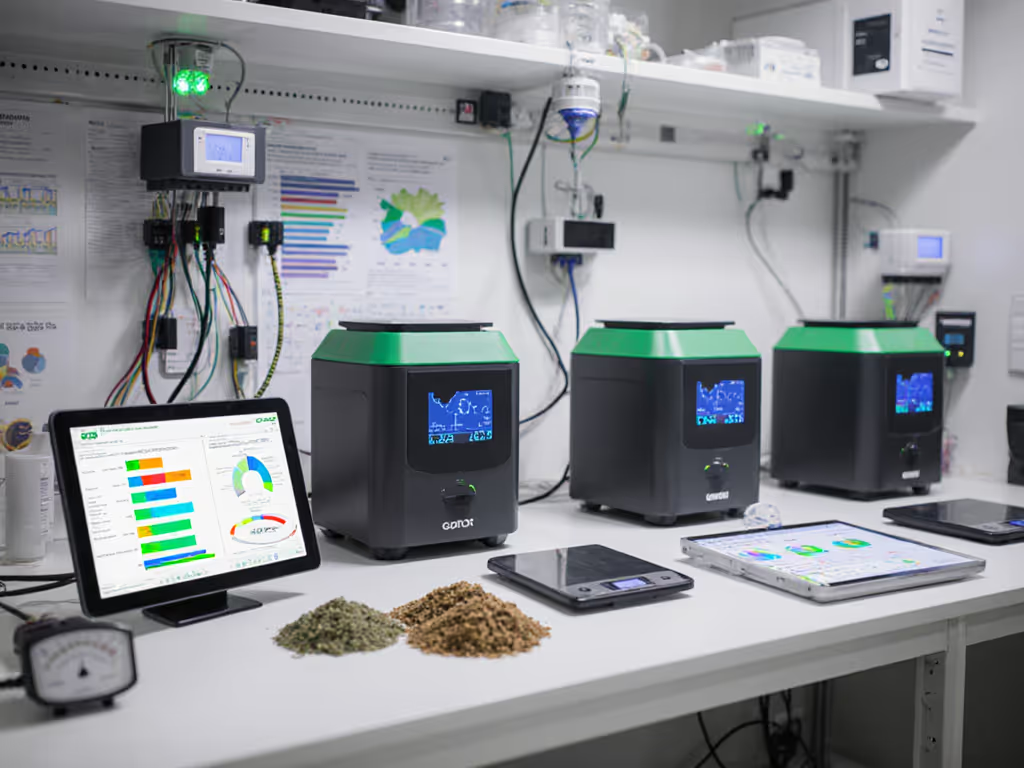
When specifying an electric composter for a commercial kitchen, log three metrics:
Heat and sealing: Does the unit retain internal warmth and have latched, airtight closure? I've tested kitchen composters across January and July in three climate zones. The only units that stayed above the 120-140°F threshold for reliable decomposition had locking latches and tight seals. Without them, odor and pest risk spike - unacceptable in food prep. To monitor temperatures reliably, consider our compost thermometer comparison. Lock it, line it, layer carbon remains the mantra: sealed equipment, a base layer (newspaper or kraft), and regular carbon additions (used coffee grounds, shredded paper) keep operations predictable.
Maintenance minutes per cycle: Count unloading time, cleaning, and cartridge swaps. The FoodCycler Eco 5 averages 3-5 minutes per cycle (empty, rinse ring, reload). The Lomi with biochar adds 2-3 minutes for cartridge swap. Reencle adds compost tray removal and occasional brush cleaning (~5 minutes). Over 250 operating days, small time differences compound. For a busy kitchen, the Eco 5's simplicity and speed may outweigh the Lomi's higher capacity.
Cost per pound diverted: Calculate total cost (unit, accessories, electricity, consumables) divided by annual waste diverted. For a mid-size restaurant diverting 1,000 pounds of scraps per year using a $250 FoodCycler Eco 5, electricity (~$40 annual), and minimal maintenance, the all-in cost is $0.29 per pound diverted - competitive with municipal composting pickup ($0.25-0.40 per pound). For a high-volume kitchen, a Reencle's higher electricity costs ($480 annually) push per-pound cost to ~$0.48, justifiable only if the finished compost is used on-site or generates offsetting marketing value.
Regulatory and Operational Notes
Before deploying an electric composter in a commercial kitchen, verify:
- Local composting ordinances: Some municipalities require finished compost or dehydrated waste to meet specific maturity standards (C:N ratio, pathogen reduction, moisture <25%). Dehydrated-only output (FoodCycler, Lomi Eco mode) may not comply; Reencle typically qualifies.
- Health department approval: In the U.S., most health codes don't explicitly permit on-site composting in food-prep facilities, but they also don't prohibit dehydration. Confirm with your local authority. Sealed, odor-free units (especially Reencle) face fewer objections than open or wet composters.
- Staff training and buy-in: Simplicity wins. A one-button interface (FoodCycler) requires minimal training; complex biochar cartridge swaps or cycle-mode selection (Lomi, Reencle) need documented procedures and champion staff.
- Utility capacity: A commercial kitchen running a Reencle or two Lomis simultaneously may spike demand. Check with facility management; some older buildings flag 3-4 concurrent high-draw appliances.
Summary and Final Verdict
Electric composters are pragmatic for commercial kitchens where space, ordinances, or operational constraints rule out outdoor composting. Choose based on volume and end goal:
- Compact food service (daily <5 lbs scraps): Vitamix FoodCycler Eco 5. Energy-efficient, simple, and cost-effective for low-volume diversion.
- Small restaurant or mixed-volume spaces (daily 10-15 lbs): Lomi Composter (Eco mode for speed, Grow mode for partial compost). Balances throughput and flexibility.
- On-site finished compost or premium ESG claims: Reencle Electric Composter. Higher cost and power draw, but true compost output justifies investment for landscaped facilities or donation-focused operations.
- Quiet, hybrid environments: Vitamix FoodCycler Max. Middle-ground throughput and silent operation, though dehydration-only output limits end-use.
Measure your composter's performance monthly: track cycle time, odor (none is standard), maintenance minutes, and cost per pound diverted. A reliable commercial composter won't surprise you - it'll log consistent heat, seal securely, and reduce labor. If it's drifting toward longer cycles, visible odor, or mounting maintenance time, troubleshoot moisture and carbon balance, or upgrade capacity. That discipline transforms an electric composter from a feel-good box into a verified waste-reduction asset.
Related Articles

Restaurant Compost Systems: Proven Commercial Solutions
Use four measurable criteria - 120°F+ heat, waterproof seals, 40–60% moisture, and under 15 minutes daily - to evaluate commercial composters, then compare stress-tested options by volume, climate, and space. Get clear benchmarks for pest resistance, labor, and ROI to choose a system that turns high-volume food waste into stable, odor-controlled compost.

Community Composting Guide: Neighbor-Approved Setup
Launch a community compost program that passes local rules and wins neighbor support. Use regulatory checklists, context-based system choices, and simple odor/pest protocols - especially in the first 30 days - to keep it clean, compliant, and sustainable.