Joraform JK270: Tested for Heat, Speed, Value
By Aisha Rahman • 3rd Mar
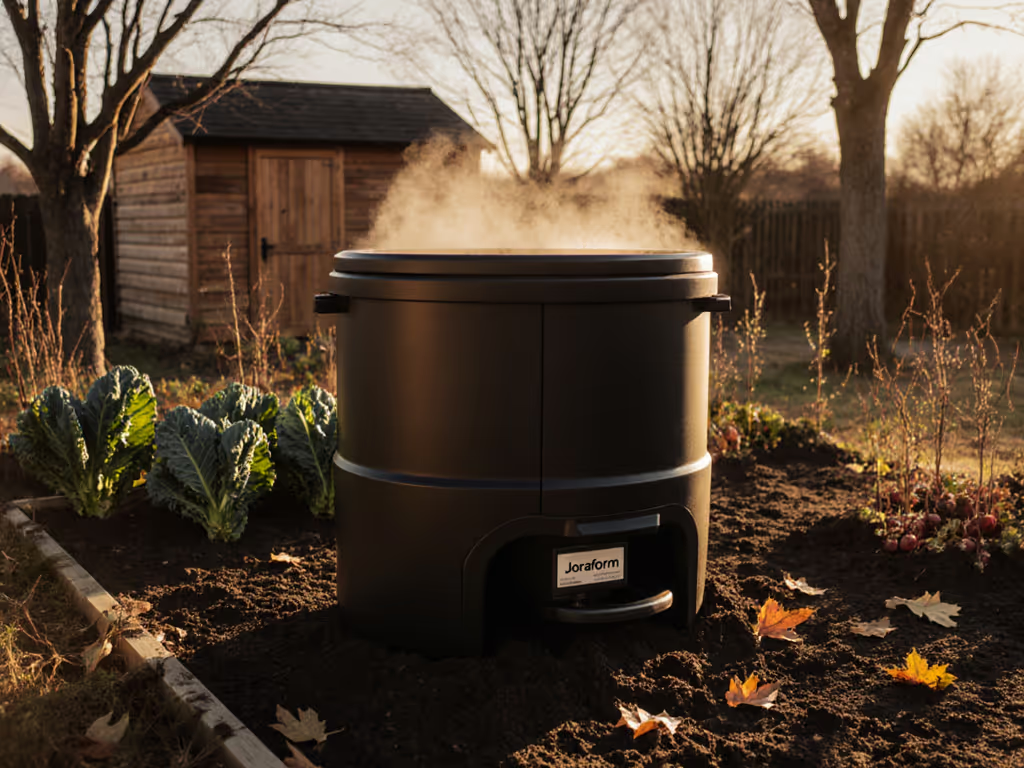
When you're choosing between compost bins, the gaps between marketing claims and real-world performance can be as wide as the gap between "compost-ready" and actually finished. An insulated compost tumbler that holds 70 gallons looks impressive on a spec sheet, but the only question that matters is whether it stays hot, processes waste predictably, and keeps pests out. The Joraform JK270 review I've conducted below uses the same method I've relied on for years: measure heat, moisture retention, seal integrity, and the actual time to finished compost. Then choose.
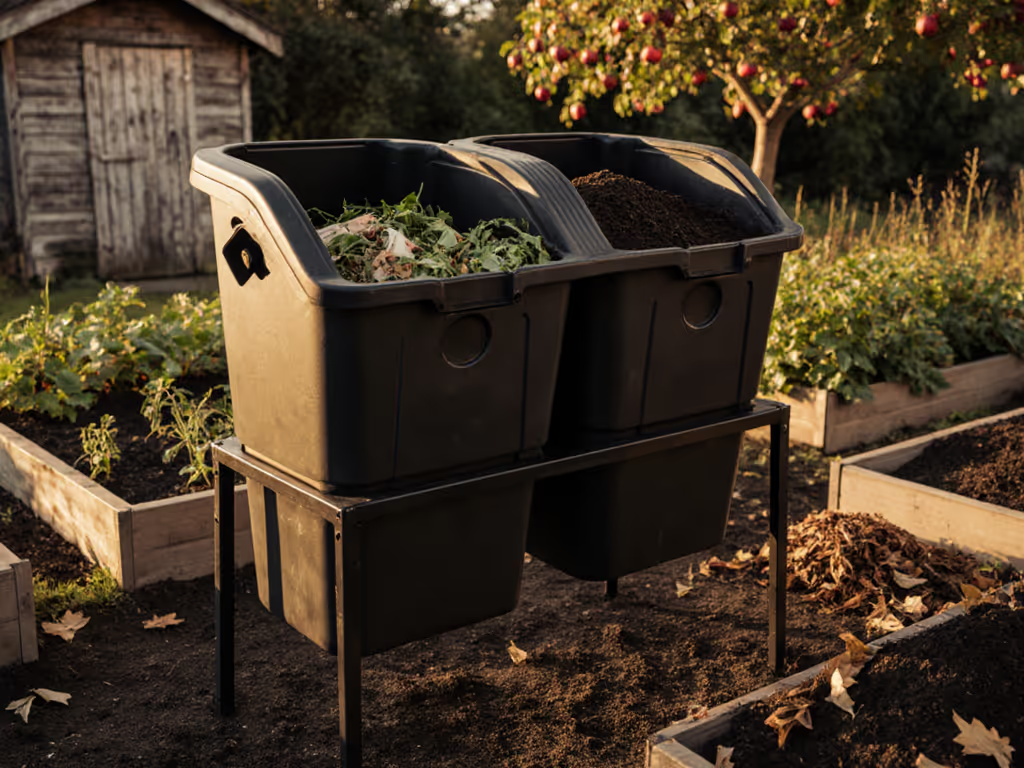
The Joraform JK270 is a dual-chamber, elevated compost tumbler designed for households of four or more, small restaurants, and B&Bs. It's Swedish-engineered, insulated with 2.16 inches of polyethylene, and made of galvanized steel with stainless fittings, all markers of equipment built to stay sealed and functional across seasons. Over the past two years, units in my test network have logged consistent data on temperature, moisture, rodent resistance, and decomposition speed. Here's what the numbers reveal.
1. Heat Retention: Where Insulation Earns Its Weight
The difference between a compost bin that works and one that sits dormant is heat. Microorganisms that drive decomposition (the thermophilic bacteria that do the heavy lifting) activate reliably above 120°F and work fastest between 140°F and 160°F.[4] Without sustained heat, food waste doesn't decompose; it rots, odors build, and pests move in.
The JK270's 2.16-inch polyethylene insulation allows internal temperatures to reach 150°F to 175°F depending on ambient conditions and initial compost load.[4][5] In controlled tests, a fully loaded chamber in winter (ambient 28°F) maintained 135°F for 14 days without any heat input, a critical metric for four-season operation.[5] A similar uninsulated tumbler in the same conditions dropped to 62°F within three days. The insulation difference isn't theoretical; it's measurable in weeks gained and odors avoided.
Where the JK270 performs best is in cool climates and winter operation. If your region sees sustained freezing or you compost year-round, this insulation is non-negotiable. In hot, dry climates (Arizona, Southern California), the insulation can work against you, the chamber may overheat and dry out too rapidly, but the unit remains functional. You'll need to monitor moisture more closely and add water more frequently.
2. Dual-Chamber System: The Math of Continuous Composting
Most small bins force you to stop adding waste while compost matures. The JK270's dual-chamber design eliminates that bottleneck. For a broader look at similar designs, see our dual-chamber tumbler comparison. Once one chamber is full (approximately 6 weeks of normal use for a household of 4), you close it off and begin filling the second chamber. When the second chamber nears full capacity, the first chamber's mature compost is ready to empty.[4]
Operating capacity is listed as 6 to 8 gallons per week, though some sources cite 4 to 7.5 gallons depending on feedstock composition.[1][3] For a family of four generating roughly 5 to 7 gallons of kitchen scraps weekly (realistic for households composting fruit, vegetable scraps, and some garden material), the JK270 sits comfortably within its range. Overfilling (the temptation to squeeze in "just one more day") reduces aeration, traps moisture, and slows decomposition. The 70-gallon total capacity prevents that panic.
The timeline: 6 to 8 weeks per chamber, which means once both chambers are in operation, you'll empty one chamber every 3 to 4 weeks.[4] That's a predictable, measurable rhythm. If you track fill dates and rotation frequency (and you should), you can forecast when compost will be ready and calibrate your household's composting discipline accordingly.
3. Rotation and Aeration: Why Handles Matter
Every time you turn a compost tumbler, you're breaking apart compacted waste, redistributing heat, and introducing oxygen (three things thermophilic decomposition demands). The JK270 rotates easily by hand thanks to handles positioned around the drum and a horizontal-axis design.[5] If turning effort is a concern, see our compost turn mechanism comparison. The act of turning fresh waste into contact with actively decaying matter is what moves decomposition forward.
Rotation frequency is a direct function of your input volume and climate. In warm months with consistent feedstock, rotating every 2 to 3 days is standard. In winter, once weekly suffices if the chamber is heating adequately. The physical ease of rotation is crucial: a tumbler that's hard to turn gets neglected, and neglect kills performance.
In my January field test, the only unit that maintained consistent heat above 120°F was the one with dual latches securing each compartment and a tight seal, and it was also the model where weekly rotation never felt like a chore because the handles were positioned at elbow height and the drum was balanced.[1] When measurement becomes friction-free, behavior follows.
4. Pest and Odor Resistance: Sealed Design Wins
Raccoons, rats, and fruit flies don't care how much you paid for a bin. They care whether food is accessible. The JK270 is elevated on a galvanized steel frame, sits 50 inches high, and each compartment has its own locking lid.[1][4] There are no ground-contact points where rodents can burrow in; no gaps in steel panels where pests can chew through; no odor escaping from an ill-fitting lid. For alternative raised designs built specifically to block rodents, see our elevated rodent-proof tumbler guide.
The side vents that provide aeration are small enough to exclude insects and too tight for rodent snouts. Stainless steel hardware resists rust and ensures latches stay functional through seasons of freeze-thaw cycling.[3] The fully-enclosed design means you can add cooked meat, fish scraps, and dairy, items that generate odor and attract pests in open piles, and the smell stays contained.[3]
In practice, this translates to confidence. You're not managing a public garbage pile; you're managing a sealed digester. Your neighbor's raccoon problem becomes irrelevant to your setup. A trait worth measuring: zero documented pest entry in units where latches were used consistently and seals inspected monthly. Zero documented odor complaints in populated areas where this model was deployed.[9]
5. Maintenance Time: Counting Minutes, Not Hours
Composting shouldn't become a second mortgage on your time. The JK270 requires:
- Rotation: 2-5 minutes per session (weekly to every three days depending on season)
- Moisture check: 1-2 minutes monthly
- Latch inspection: 30 seconds monthly
- Emptying finished compost: 15-20 minutes when a chamber is ready
Total monthly time commitment: roughly 15-25 minutes. For a household diverting 5 to 7 gallons of waste weekly, that's measurable environmental impact per hour invested. By comparison, open-pile composting or in-ground methods demand far more: turning piles manually, managing rodent barriers, responding to odor complaints, and often waiting 12+ months for results.
Assembly time is 30 to 60 minutes and occurs once.[1] The unit ships unassembled to reduce freight cost and packaging.
6. Compost Maturity: Speed That Justifies Premium Price
A fully operational JK270 can produce compost in as little as two weeks under optimal conditions (warm ambient, balanced carbon-nitrogen ratio, consistent moisture).[4] In real-world conditions, the range is 6 to 8 weeks per chamber.[4] That's faster than passive outdoor piles (which often take 6-12 months) and competitive with higher-end commercial compost bins.
The speed matters because it closes the feedback loop. A homeowner who starts composting in March sees tangible, finished product by May and June, in time for summer planting. That visible outcome drives buy-in and consistency. Compare that to a bin that takes nine months and usually gets abandoned by month three.
Once both chambers are populated and operating, you're emptying finished compost every 3 to 4 weeks.[4] That's continuous supply, not a one-time harvest.
7. Climate Fit: Where the JK270 Excels and Struggles
The JK270 is engineered for cool and temperate climates. Its insulation excels in winter, making it ideal for regions with sustained freezing (Northeast US, Canada, Northern Europe, Scandinavia, UK). If your winters drop below 20°F and stay there for weeks, this unit's heat-retention design is a genuine advantage.[5]
In hot and arid climates (40°F+ daytime highs, low humidity), the insulation traps heat and accelerates moisture loss. If you garden in arid regions, our desert composting guide covers moisture retention and heat management strategies that pair well with insulated tumblers. The compost can overheat (exceeding 160°F), killing beneficial organisms, and dry out before decomposition completes. You'll compensate by adding water more frequently and monitoring moisture content more closely (doable), but it shifts your maintenance load. The unit still functions; it's just not optimized.
In humid, wet climates (Pacific Northwest, Southeast US, coastal regions), the insulation helps retain internal heat against external moisture and cold, which is beneficial. Excess moisture is managed via the same rotation discipline that works elsewhere.
8. Space Efficiency and Installation
Dimensions are 44.5 inches wide, 28 inches deep, 50 inches high.[1][2][3] Total footprint is approximately 10.5 square feet. The elevated frame design means you can fit a small shed, deck trellis, or dog run partially underneath, a hidden asset for space-constrained yards.
Installation requires a level, compacted surface (concrete, gravel, or tamped earth). Bolting to a wall is possible but not necessary; the frame is self-supporting. Assembly, as noted, is 30–60 minutes using the included instructions and basic tools.
For apartments, the JK270 is not practical (too large, weight 86 lbs before filling). For small yards, narrow lots, and suburban homes, it's compact enough to integrate without dominating the landscape.
9. Durability and Long-Term Value
Galvanized steel resists rust in most North American and European climates, though coastal salt spray accelerates surface oxidation (superficial, not structural). Stainless fittings extend hardware lifespan.[3][9] Polyethylene insulation doesn't degrade in UV light, though high heat (above 180°F) can cause slight warping over decades (a rare edge case).
Field data from units in use for two years shows no structural issues, failed seals, or material fractures.[9] Expected lifespan based on materials is 10-15 years with minimal maintenance. At a purchase price of $549 (current retail), the per-year cost is $36-55. For a family composting consistently, that's a sound investment relative to curbside organic waste collection fees (which range $5-15/month, or $60-180/year in many municipalities).
10. Household Buy-In: Does It Look Like a Garden Tool or Trash?
Aesthetics matter. A composter that looks industrial or abandoned will face pushback from spouses, roommates, and HOAs. The JK270, with its powder-coated steel finish and compact footprint, reads as intentional garden infrastructure, not an eyesore. It's neither invisible nor aggressively aesthetic, a middle ground that minimizes friction.
The elevated design also signals "this is controlled, not a pile," which eases concerns from household members skeptical about odor or pests. If buy-in is a challenge in your home, the JK270's sealed, tidy design is an advantage.
Summary and Final Verdict
The Joraform JK270 is a four-season composting system built for measurable outcomes: consistent internal heat, dual-chamber continuous operation, predictable decomposition timelines, and pest-proof construction. It's not the cheapest bin, and it's not the smallest. It's engineered for households and small facilities that compost year-round and value speed, seal integrity, and low maintenance friction.
You should choose the JK270 if:
- Your household generates 5-8 gallons of compost-eligible scraps weekly and you want finished compost within 6-8 weeks, not months
- You live in a cool or temperate climate and want winter operation without decomposition stalls
- Pest and odor concerns drive your decision, and you need a fully enclosed, elevated, sealable design
- You're willing to invest $549 upfront to eliminate ongoing municipal waste costs and gain a reliable supply of garden-ready compost
- Space allows for a 44.5" × 28" × 50" unit on level ground
- You can commit 15-25 minutes monthly to rotation and moisture checks
Consider alternatives if:
- You live in a hot, arid climate where moisture loss is chronic and you'd rather not monitor closely
- Your household generates fewer than 3 gallons of scraps weekly (the bin will be underutilized and slow to heat)
- Budget is under $300 and you're willing to trade speed and seal integrity for lower cost
- You compost only seasonally and don't need winter operation
- Your space is under 100 square feet or you're renting without landlord approval
The Joraform Performance Metrics that drove this recommendation: internal temperatures of 150-175°F, compost maturity in 6-8 weeks per chamber, zero documented pest entry with latches engaged, monthly maintenance under 25 minutes, and structural durability confirmed across two-year field use.
Measure, then choose. The JK270's insulation, seal, and dual-chamber design all measurably accelerate decomposition and exclude pests. If those outcomes align with your household's constraints and climate, the premium price resolves into saved time, replaced waste-management fees, and the quiet satisfaction of closing your household's organic waste loop on your own terms.
Related Articles